
FTX – Where there was smoke, there was an inferno
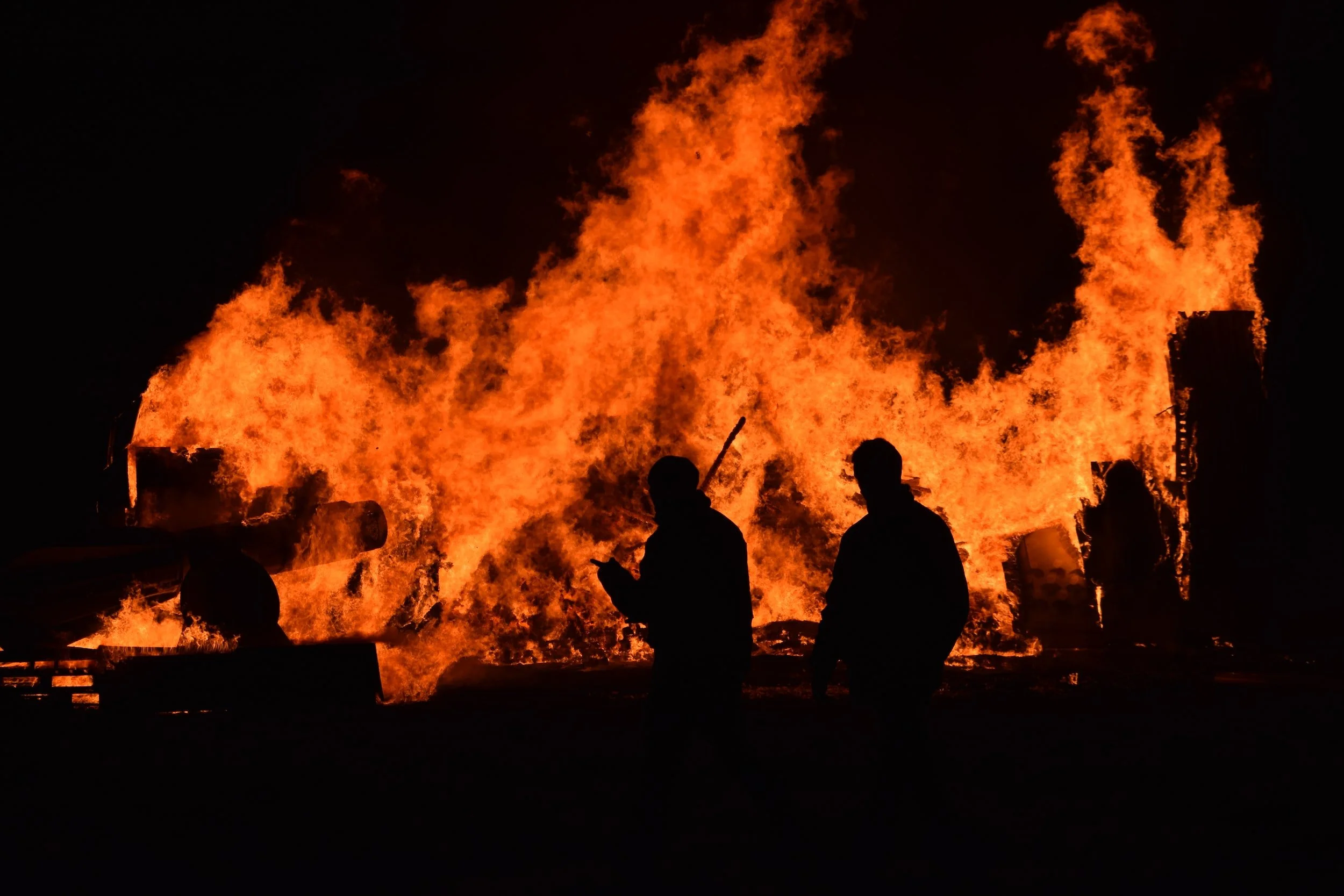
Photo by Issy Bailey on Unsplash
The dream state of most risk-takers, hedge fund managers included, is to be “risk-neutral”, or in the terminology of professional poker (which is very much also a risk management game), “game-theory optimal”. Being too risk-loving isn’t good, because variance in outcomes can easily wipe out capital way before long-term statistical balance comes into play (i.e. can be the “unlucky” 1% of the time, all of the time for some time); on the other hand, being too risk-averse isn’t good either, especially when everyone’s in a race to deliver real returns, ever more in demand in an inflationary world.
Investors in our crypto fund, Slingshot, would have received an email from us two days ago, notifying them that all our capital had safely been withdrawn from FTX, which was our trading venue for crypto futures, as of Sunday, and as an additional measure of safety had been converted back to USD fiat with the Fund’s banker, Swiss-licensed SEBA Bank.
With hindsight this was the right move, given what has transpired with FTX over the past few days. There is no shortage of articles now being written about the past few days, and we’re sure that in the months and years to come, more facts will emerge from behind the veil. In fact, as we write this note, FTX has just filed for voluntary Chapter 11 Bankruptcy protection and has ominously appointed the same man, John Ray III, as Enron did all those years ago, to clean up its mess.
Many fortunes are going to be definitively lost by the time this saga is through, and probably many lives impacted. And while we are in the clear, our thoughts go out to those who had decided to trust FTX as a platform, leaving significant amounts of savings and capital on platform, of which likely not much will ever be recovered. Many of these people are our friends, our peer fund managers and even people we have followed on Twitter for years and looked up to in many cases. It hurts to even think about it. We feel their pain. We found each of ourselves trembling in bed each night this week despite getting out because it was so damn close.
This is a situation that is very much in flux, and hindsight points to our decisions now being correct. Yet, this time last week, the decision we faced was nowhere near as clear cut. It was certainly by no means “risk-neutral”.
The rumour mill
The question we’ve been asked most frequently this week was “how did you know?”.
After all, it seemed that many crypto heavyweights were caught cold. The answer is we didn’t know. We just decided that any chance more than zero was too much.
The reality was that questions around the soundness of Alameda Research, the market maker and FTX founder Sam Bankman-Fried’s (SBF) prior venture BEFORE FTX, were already being asked last week, when this article on Coindesk started to make the rounds. The gist of it was that Alameda Research had a hugely levered balance sheet, built on top of the value of FTX’s native token FTT, from which it derived a large proportion of collateral value, thus allowing it to undertake the market making functions that made it the crypto giant it had become.
The initial reaction was “well, Alameda and FTX are different entities right? Plus SBF is literally the golden child of US regulators, surely, he wouldn’t commit the mortal sin of commingling client and prop assets?”
For a day or two, we put it down to the rumour mill, which in crypto is vicious and often wildly off the mark. SBF himself came on Twitter with assurance tweets, even pointing to competitors trying to discredit FTX’s financial integrity as the premise for these attacks on them. Funds were safe, there was sufficient liquidity for withdrawals, and no one was reporting issues with withdrawals so what could go wrong?
As the week came to a close, however, the rumours didn’t seem to stop – in fact they got even more pronounced. Speculation was growing that SBF had indeed committed the capital sin of commingling funds, and while the initial Coindesk article and SBF’s subsequent responses were starting to pick up coverage within the “crypto news”, nowhere in the mainstream financial media was there even a mention of FTX being on the rocks.
Weekend risk
One of the big risks intrinsic in society’s current 5-day work week is the closure of almost everything over the weekend.
The problem is that risk happens anytime, and the difference between getting out unscathed and obliteration could well be a matter of moments – and one weekend is a lot of moments.
Heading into the weekend, the persistence of speculation on crypto twitter was deafening to anyone who bothered to listen. Here was a hodgepodge of anonymous twitter accounts with cartoon character profile pictures and senseless names discussing and posting analyses of whatever public information – on and off chain – they could get on the movements and nature of Alameda/FTX funds.
The evidence was sparse, and to say it was “mounting” is an exaggeration – what it definitely did was not stop growing, off its small base.
So, on Saturday afternoon, we floated the idea of pulling all our cash from FTX for the first time. The calculus was very much NOT in favour of doing so, especially given how we had also schemed out a huge short trade on Solana the month prior. Readers of our fund factsheet will know that we had put shorts on in anticipation of such a move.
The Solana short was the trade to make our year, for this two-month-old fund. But pulling cash from FTX meant we wouldn’t be able to make that trade, and nothing would make us sicker than seeing the trade we schemed out so carefully play out in front of our eyes, and not having a position in place.
At least, that’s what we thought.
Nonetheless, in preparation for the possibility of pulling our collateral, we activated our multi-signature wallet for the fund on Saturday, and left it as something we’d process over the coming days before making a rash decision.
On Sunday morning, we woke up to a feeling of profound dread. It wasn’t rational, however.
The odds were simple: there was a 1% chance of things going very wrong, and a 99% chance that we were being paranoid and moving funds around would just mean we ran the risk of missing out on the winning trade we’d schemed out. After all, crypto moves fast, so if you’re not in position and ready to trade, the opportunity could disappear in minutes. The chance to make a superstar return on the contrarian trade of the year – we could well miss that chance.
On the flipside, the 1% probability entailed an outcome which would be catastrophic. Loss of funds (both our own and investors’), getting stuck in a lawsuit trying to recover these funds and perhaps most importantly a lapse in fiduciary responsibility – we didn’t want to go there either. Was it worth risking a material, potentially career-ending loss in order to make a material, career-making gain?
And it was Sunday. Was it worth making calls and bothering everyone just on the basis of a hunch? Then again, there could be no smoke without fire, and there was more smoke than at the Vatican when there’s a new pope.
The rest, thankfully, is history. After a call to our AIFM, Andrew, in the morning to explain the hunch and the risk, and an email documenting the proposed movements of funds, we moved about 80% of our cash collateral out into a multi-sig wallet.
All in, it was quick. Easy. Just like usual.
Minimally, we’d have some cash to play with if nothing went wrong, while protecting the majority of our capital.
At this point, we also want to make one thing clear: as much as the happenings in the crypto world right now are cannon fodder for those who would write crypt off as an entire Ponzi, it is also ENTIRELY thanks to Ethereum that we managed to move our funds out of FTX to a multi-sig wallet on a Sunday.
A couple of hours later, we decided to pull the rest of our funds. We decided it wasn’t worth it.
This time, the withdrawal took a little longer.
But the confirmation email from FTX eventually came, and we were out. For better or for worse.
Implosion
Monday came along. And we were thoroughly annoyed with ourselves. EVERYTHING was down, we could’ve made a killing, we could’ve made a huge return for our investors – the trade we had envisioned was in play, and what were we doing? Sitting in cash.
But then the reports started to come. Withdrawals were now taking 18 hours, in other cases permanently stuck on “requested”.
Had we tried to request a USD wire of funds on Monday with T+2 settlement, we probably would have become one of the prospective parties in a future class-action lawsuit against FTX. Monday was with hindsight the last chopper out of Saigon, by the time Tuesday came around, withdrawals were effectively suspended.
By the end of Tuesday, FTX’s token, FTT, had crashed. Withdrawals had been halted, and evidence was pointing to the fact that SBF had indeed committed the mortal sin of all mortal sins: commingling assets to bail out Alameda Research, which presumably had been hit hard in the wake of Luna/3AC earlier in the year. A prospective deal was floated by Binance which would see them acquire FTX (with an accompanying spike in BNB’s token price), but even that deal was binned soon after – supposedly following a cursory due diligence of FTX’s books.
The rest of it is history in the mainstream financial press.
For our part, as the contagion spread, even holding USDC was one level of risk too high for us – so we swapped everything back to fiat USD. In fact, at one point we even considered holding our balances in CHF, but that would’ve probably gone a bit too far.
But contagion risk was now real. FTX was the golden child of crypto, the one that would deliver us to the promised land of reconciliation and peace with regulators. As a result, FTX was in no small number of VC/PE portfolios – Sequoia in fact previously had a glowing (fawning) profile of SBF on its website, which has now been removed. Fortunately, there’s the web archive, and the internet doesn’t forget, so that article can be found here: https://web.archive.org/web/20221109195833/https://www.sequoiacap.com/article/sam-bankman-fried-spotlight/
Were we annoyed that the trade we had planned out came and went without us? Of course. Annoyed would be the greatest understatement one could make.
But had we gone for “risk neutral”, and “considered the balance of probabilities in advance of the event”, as one would theoretically approach risk, we’d be in a terrible situation right now.
Capital preservation as top priority
Ultimately, as we wrote in our short note to investors, investment management is ALL about risk management. Risk management isn’t an appendix that gets stuck to the back of a PPM just to fulfil a regulatory requirement.
Rather, investment is all about taking risk, so it would make complete sense that investment management = risk management. It was always the same thing, and will always be.
Hence of the two rules that govern how we manage money, the first and foremost is “Don’t lose money”. The second rule is don’t forget the first rule.
Risk is not only about market risk. Every manager worries about the market, whether prices go up and down, whether P&L goes up and down, and of course that’s of paramount importance – that’s our job.
As we know now, risk is much more than that: it is about keeping eyes and ears on the ground, forming as complete a picture of what could happen and looking at how those tail risks could materialise. Counterparty risk, credit risk, operational risk – these are as important as market risk, but whereas market risk is subject to volatility and unpredictability, these non-market risk factors are observable and manageable, if one pays attention.
Our annoyance at missing a huge trade cannot be understated. After all we are traders. But what’s the point of making a winning trade when we wouldn’t be able to realise those profits? In fact, all we would’ve done was lost the collateral value we put in to make that trade. Would investors appreciate us “trying” to make that extra return, potentially even “winning” that trade in unrealised P&L, but losing 10-20% of capital in the end?
Probably not. It would have been an extremely poor decision, especially with hindsight.
When we say we work day and night, every day, to protect and grow investors’ capital right next to our own, we literally mean it. Risk doesn’t stop on Saturdays, nor on Sundays. We have sizeable skin in the game in both our funds. Our savings, our nest eggs. This can’t be understated as a reason for action. We are literally managing our own money alongside whoever wants to join us.
Banks may close, settlements may take days, but we don’t stop. We never stop.
We caught the risk this time, but this won’t be the last time. Another reminder that in fund management the line between success and failure is so razor thin. We appreciate that and we are incredibly grateful to whatever force is out there that we were on the right side this time. As we said to an investor earlier on Friday, we just hope we are smart enough and alert enough to get it right next time in whatever format that will be. It will be something different for sure.